

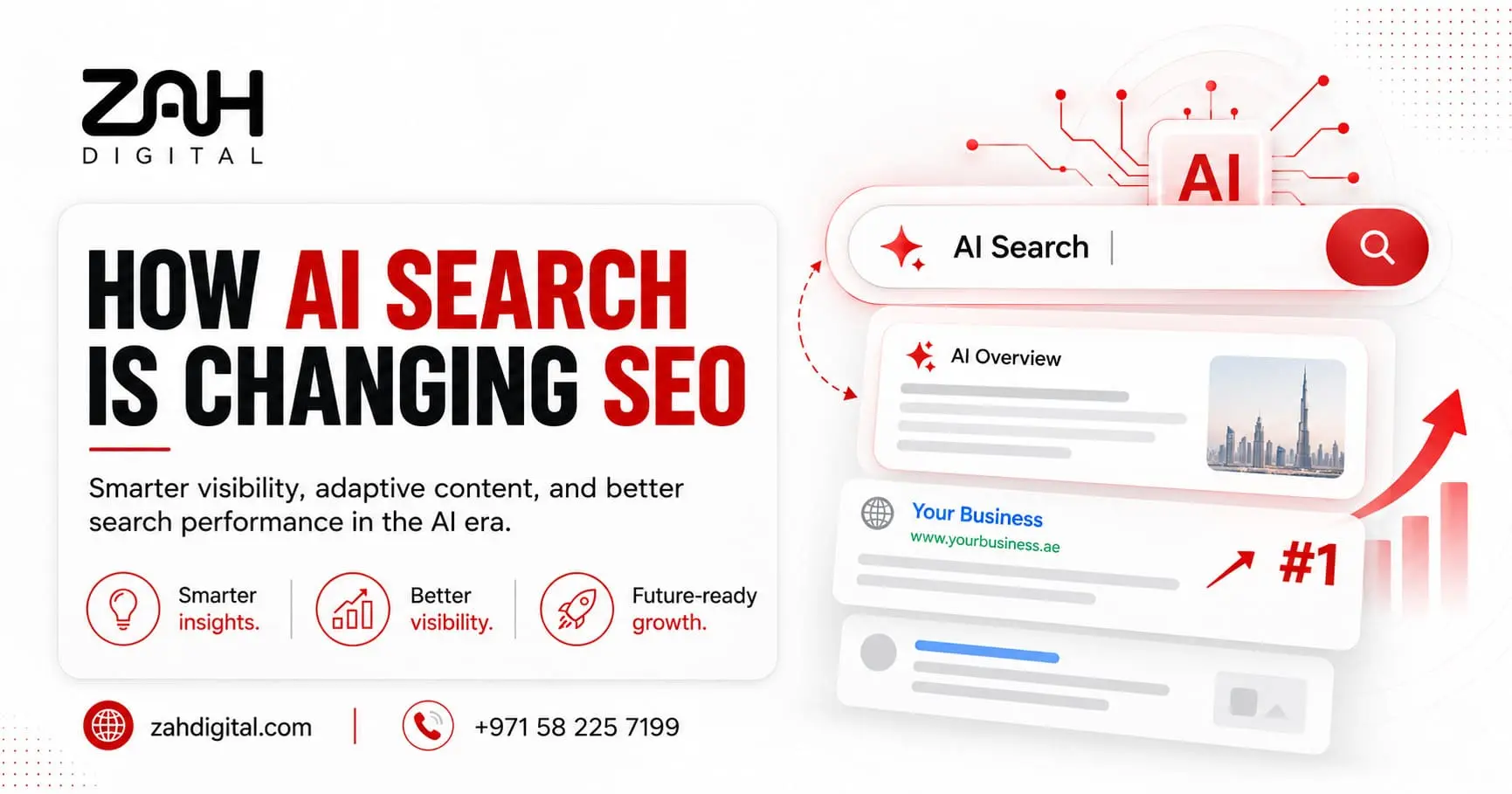
Search doesn’t work like a simple list of blue links anymore. In 2026, Google and other platforms can interpret a complicated question, gather information from several sources and present a usable response within seconds. Consequently, AI search SEO 2026 isn’t only about reaching position one. Brands must also become sources that search engines trust, quote and recommend.
What Is AI Search and Why Does It Matter?
AI-powered search will use language models. Search indexes and contextual signals. To understand what someone actually wants. Instead of matching a few keywords. It considers meaning and relationships. Also likely follow-up questions.
Google originally tested this approach as SGE (Search Generative Experience). Today, users mainly encounter it through AI Overviews and AI Mode. In fact, Google says its generative features remain connected to core Search ranking and quality systems, so traditional SEO still matters.
For instance, a person may ask, “Which Dubai SEO service suits a new property company with a limited budget?” The engine can compare options, explain trade-offs and suggest the next step. That makes useful, specific content far more valuable than a page built around one repeated phrase. Get details on SEO Service in Dubai.
How AI Overviews Are Reshaping Click-Through Rates
Generative search results often answer straightforward questions without requiring a website visit. As a result, zero-click searches can reduce traffic to basic definition pages.
However, this shift doesn’t make organic visibility worthless. It changes the kind of click a business needs to earn. Someone who visits after reading an AI-generated summary may arrive with clearer intent and greater confidence.
Therefore, traffic alone gives an incomplete picture. SEO teams should also monitor qualified enquiries, branded searches, assisted conversions and appearances within AI-generated answers. Google has introduced generative-AI reporting in Search Console to help site owners assess this visibility.
Related Services:
» Social Media Marketing Service in Dubai
» Website Designing Service in Dubai
» Performance Marketing Agency in Dubai
SEO Strategies That Work in AI Search
Strong technical foundations still come first. A page must remain crawlable. Indexable. Fast and easy to navigate. Each article must answer a recognisable customer need with evidence. Practical detail and a clear point of view.
Businesses must:
- Use descriptive headings. Concise answers. Examples and relevant internal links.
- Strengthen semantic search relevance by covering connected questions naturally.
- Add valid structured data where it genuinely describes the page.
- Demonstrate E-E-A-T through real experience. Expert authorship and transparent business information.
- Prepare for voice search optimization with conversational, locally relevant questions.
- Update statistics, prices, processes and recommendations when circumstances change.
That said, no special AI schema guarantees inclusion. Google confirms that pages don’t need additional markup to appear in AI Overviews or AI Mode.
Related Articles:
» SEO Best Practices to Rank Higher on Google in Dubai
» Top SEO Strategies to Increase Website Traffic in Dubai
» SEO Content Calendar Ideas for UAE Businesses
» How to Combine SEO and Paid Ads for Better Leads?
» What Is On-Page SEO and Why Is It Important?
AEO and GEO Join the SEO Toolkit
Answer engine optimization (AEO) helps content deliver a clear response quickly. Meanwhile, generative engine optimization (GEO) aims to make information understandable, trustworthy and citation-worthy for generative systems.
Neither practice replaces SEO. Instead, they expand it. A successful page now serves readers, conventional search results, voice assistants and AI answer engines without sounding manufactured.
If your current strategy still measures success through rankings alone, it’s time to widen the lens. ZAH Digital can build an SEO, AEO and GEO strategy that turns genuine expertise into discoverability, citations and qualified leads.
FAQs: How AI Search Is Changing SEO
AI search uses artificial intelligence to understand questions and generate context-aware responses. It can combine information from indexed pages instead of displaying only a conventional list of links. As a result, users can explore detailed topics through natural follow-up questions.
AI search SEO will mean optimising content. For both traditional rankings and AI-generated answers. It will combine technical SEO and useful content. Entity clarity and credible evidence. The objective includes earning citations and recommendations, not simply securing a high-ranking link.
AI Overviews can reduce clicks for queries that receive a complete answer on the results page. However, detailed commercial, local and high-consideration searches can still generate valuable visits. Businesses should focus on traffic quality and conversions alongside total sessions.
SGE was Google’s experimental search experience that developed into AI Overviews. The SGE name mainly refers to the earlier testing phase. AI Overviews and AI Mode now represent Google’s broader generative-search experience.
No. AI search will not replace traditional SEO in the foreseeable future. Generative systems will still depend on accessible and relevant content. Also trustworthy web content. Technical optimisation, internal linking and people-first publishing therefore remain essential.
Answer engine optimization structures information so answer platforms can identify and present it clearly. AEO commonly uses direct responses, descriptive headings and logically organised supporting details. It can improve visibility in featured snippets, voice results and AI-generated answers.
GEO targets visibility within generative responses, while SEO traditionally targets organic search listings. GEO places extra emphasis on citation-worthiness, factual clarity and topical relationships. However, both practices rely on useful content and sound technical foundations.
A business can improve its eligibility by publishing crawlable, original and reliable content that answers relevant searches. Clear authorship, supporting evidence and accurate business details strengthen trust. Still, no tactic can guarantee selection for an AI Overview.
E-E-A-T will support the trust signals. That search systems use. When evaluating content quality. Google will explain that E-E-A-T itself isn’t one standalone ranking factor. The firsthand experience and expertise. Also transparency can make a page more useful and credible.
No, structured data isn’t required for inclusion in Google’s generative search features. Valid schema can still help search engines interpret eligible page elements and produce rich results. Businesses should use accurate markup rather than adding unsupported properties.
Content should answer naturally worded questions in clear, concise language. Local details, complete sentences and useful follow-up information can support voice search optimization. However, writers shouldn’t force awkward question phrases into every paragraph.
Businesses should measure AI visibility through impressions, qualified visits, conversions and brand demand. Search Console data can reveal how Google’s generative features contribute to discovery. Meanwhile, enquiry quality and assisted conversions show whether that exposure creates commercial value.